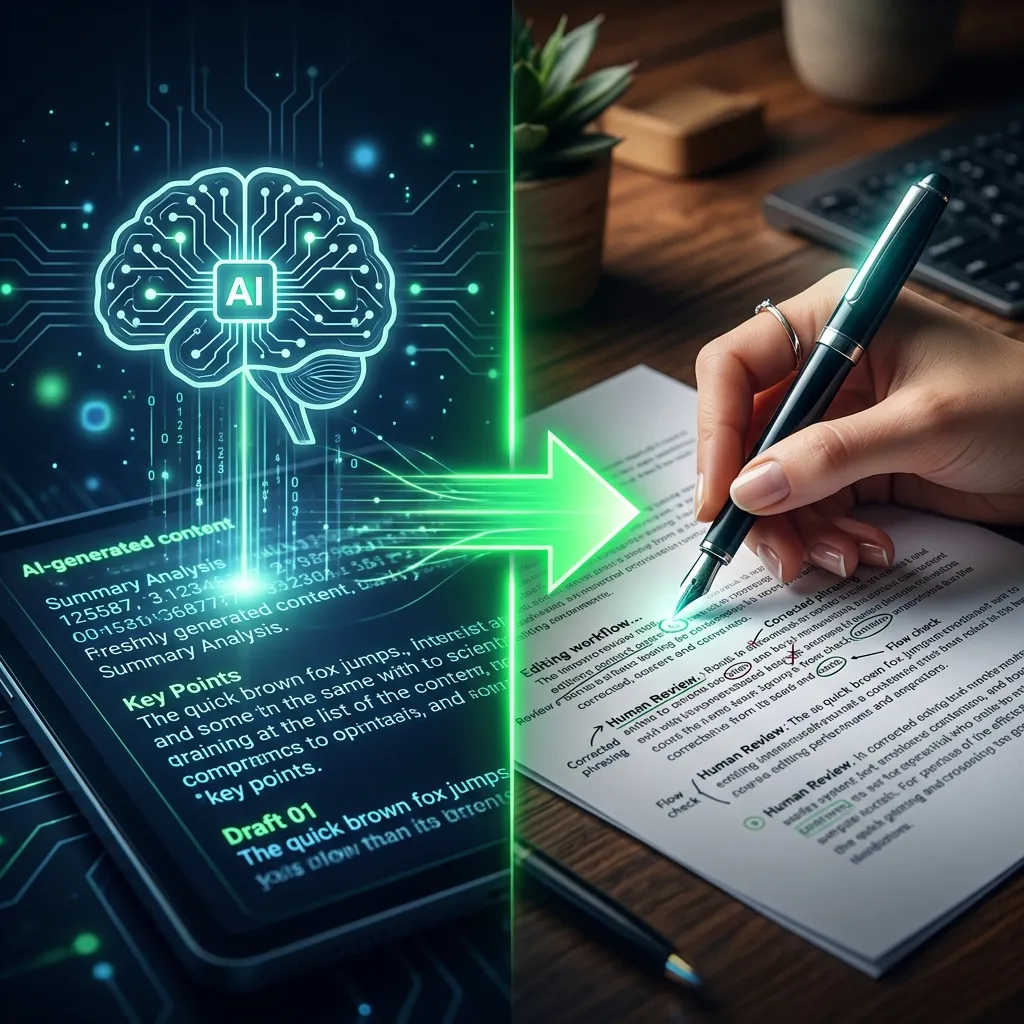
Let me be direct about something before this post starts sounding like an AI hype piece: I am not an AI enthusiast. I'm an email infrastructure consultant. I use AI the same way I use a torque wrench — because it's the right tool for a specific job, not because I want one in my hand at all times.
That said — AI genuinely helped me take a client's open rate from 6% to 20%. It helped another client's bounce rate drop to below 1% and their sales grow fivefold. I'm also the person who caught a DMARC record that an AI generated with a syntax error that would have silently broken all outbound email. Both things are true, and I think that combination is more useful to you than either story alone.
Where AI Actually Earns Its Place
I use three tools with any regularity: ChatGPT for subject line brainstorming, Grammarly for tone and readability checks, and Litmus AI for pre-send spam score prediction. That's it. I'm not building models. I'm not fine-tuning anything. I'm using AI as a first-draft generator and a consistency checker — roles where its strengths (speed, volume, pattern recognition) match the task.
| Tool | What I use it for | Human step after | Trust it blindly? |
|---|---|---|---|
| ChatGPT | Generate 10–15 subject line options fast | Pick 2, rewrite both in human voice | Never |
| Grammarly | Tone check, readability, passive voice flags | Accept or reject each flag manually | Never |
| Litmus AI | Spam score before send, rendering preview | Investigate any flagged element before deploying | Never |
| ChatGPT | Template first-draft structure | Full rewrite for brand voice and natural flow | Never |
The pattern is consistent across all of them: AI generates a starting point. I decide what's usable. That distinction matters more than it might sound.
Case Study One: 6% Open Rate → 20%
A client reached out after months of declining engagement. They create done-for-you graphic design packages for sports clubs — branding, kit designs, social media assets, the works. Their email list was active, their product was solid, but their campaigns were being ignored. Open rate sitting at 6%. Click rate at 1%. Both had been declining steadily for several months.
The problem wasn't one thing. It was a combination: subject lines that were functional but flat, a main template that looked professional but felt like a form letter, and no personalisation that connected the email to what a sports club actually cared about on any given week.
I used AI to generate a large batch of subject line options — phrases built around urgency, curiosity, seasonal relevance, and the specific language sports club managers respond to. From that batch, I selected the strongest structural ideas and rewrote them to sound like a person, not a content generator. Same process with the template: AI gave me a structural draft that covered the right sections in the right order, and I rewrote the copy until it read like something the client would actually say.
The improvement wasn't instant. It took two campaign iterations. But by the third campaign:
AI gave me speed and volume in the brainstorming phase. My experience shaped what went out the door. Neither alone would have produced that result.
Case Study Two: Bounce Rate to Under 1% — and Sales Grew Fivefold
A different client, a different kind of problem. This one wasn't about creative — it was about infrastructure. Their campaigns were bouncing heavily. Not occasional soft bounces, but consistent, damaging hard bounces that were slowly destroying their sender reputation. Emails that did get through were landing in spam more often than not.
The root cause was a contact list that had never been properly segmented. Everyone got everything, regardless of engagement history, contact source, or list age. Inactive addresses that had been soft-bouncing for months were still receiving every broadcast. The complaint rate was climbing. Inbox placement was deteriorating.
I used AI to assist with the segmentation logic — classifying contacts by engagement recency, bounce history, and acquisition source, then defining the rules for how each segment should be handled going forward. The AI generated the framework. I validated it, adjusted the thresholds based on what the data actually showed, and built the suppression rules manually.
Recovery didn't happen in one campaign. It took three. But the trajectory was consistent:
The sales growth followed naturally once emails started reaching inboxes. It wasn't a marketing improvement — it was an infrastructure improvement that unlocked revenue that was already there but being filtered out.
Where AI Does Not Belong: The DMARC Story
Here's the part I find more important to tell than either success story.
A client came to me after using ChatGPT to set up their email authentication. They'd asked it to generate their DMARC record, copied the output directly into their DNS, and moved on. It looked correct. The format was right. The values were plausible. They had no reason to doubt it.
When I audited the setup, I found a syntax error in the sp= tag — the subdomain policy parameter. ChatGPT had generated an invalid value that DMARC parsers at major inbox providers would reject, causing DMARC to fail silently on all subdomain mail.
v=DMARC1; p=reject; sp=reject; rua=mailto:dmarc@example.com; adkim=r; aspf=r
↑ This particular combination of sp= value and adkim/aspf strictness settings produced a record that would fail validation at some receivers — the exact failure mode depends on the receiving MTA's DMARC parser strictness. The point is that it was wrong, it looked right, and it had been live for weeks.
The client had no reason to question it. The format looked professional. It had all the right fields. This is what makes AI errors in technical infrastructure dangerous — not that they're obviously wrong, but that they're confidently, plausibly wrong.
This is why I don't use AI for DMARC configuration, SPF record generation, DKIM setup, or any other authentication infrastructure. These records are exact. A single wrong character breaks the entire system. An AI model has no way to test what it generates against a live DNS resolver. It cannot know if the record will validate. It produces syntactically plausible output — which is different from correct output, and in this domain, the gap matters enormously.
What This Means Practically
AI is a useful collaborator in the creative and analytical parts of email work. It generates options quickly, helps with tone consistency, and surfaces patterns across large datasets faster than I can do manually. For subject lines, template structure, and list segmentation logic, it accelerates the early stages of work that I would have spent more time on without it.
It is not a substitute for the experience that tells you which option to choose, how to adapt strategy to a specific audience, or when a technically correct-looking output is actually wrong. The DMARC story is the clearest example I have of that distinction. The sports club results are the clearest example of what happens when you get the balance right.
AI handles the volume. Expertise handles the judgment. Both have to be in the room.
Why You Need a Campaign Manager Watching This Daily
Both client situations I described above share a common thread: the problems were building for weeks or months before anyone noticed. The sports club's open rate didn't drop overnight. The other client's sender reputation didn't collapse in a single campaign. These are slow-moving problems that compound quietly — and then hit a threshold where the damage is visible and already significant.
The businesses that catch these problems early have someone watching deliverability metrics daily. Someone who notices when open rate drops 2% in a week and asks why before it drops another 4%. Someone who sees a bounce rate tick upward on a specific segment and isolates it before it contaminates the broader list. Someone who checks DMARC reports and catches the day a DNS record changes unexpectedly.
That's the retainer model I work within for ongoing clients. Not campaign-by-campaign, but continuous monitoring with intervention when the data calls for it. AI helps with the analysis. Experience drives the decisions. The client's inbox placement and sender reputation are maintained rather than recovered.
Recovery is possible — as the examples above show. But prevention is less expensive, less stressful, and keeps revenue flowing consistently rather than in cycles of damage and repair.
Ongoing Email Support — Retainer Model
I work with a small number of clients on a retainer basis — daily deliverability monitoring, campaign review before send, authentication audits, and intervention when something changes. If your email is central to your revenue and you want someone watching it properly, let's talk.
First conversation is free. WhatsApp works if that's easier.
Questions I Get Asked About This
sp= tag that would have caused DMARC to fail on all subdomain mail. The record was formatted correctly at a glance and would not have been caught without reading the raw DNS output character by character. This is the category of AI failure that causes real damage — not obvious nonsense, but plausible technical content that is quietly wrong.